

Skin Camouflage
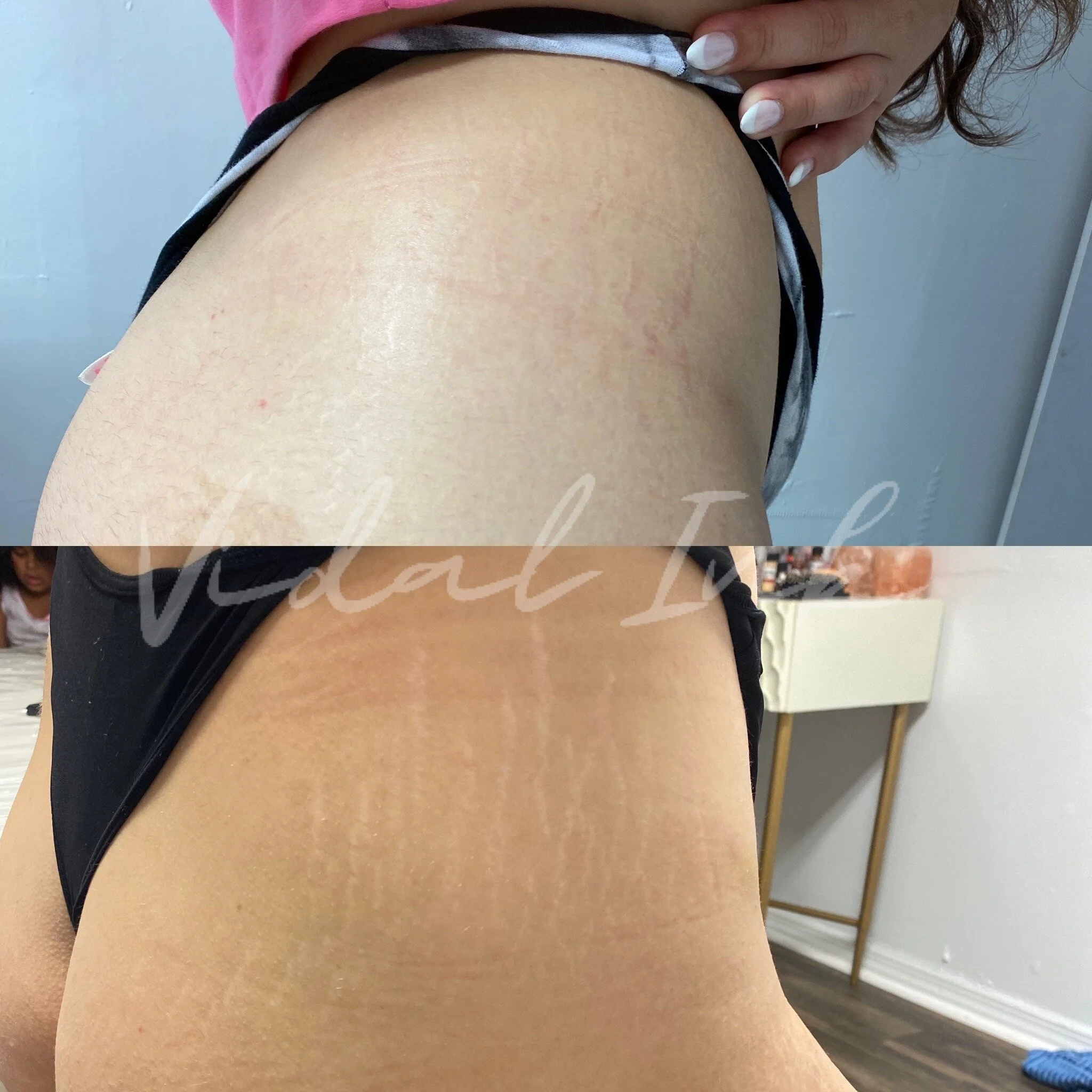
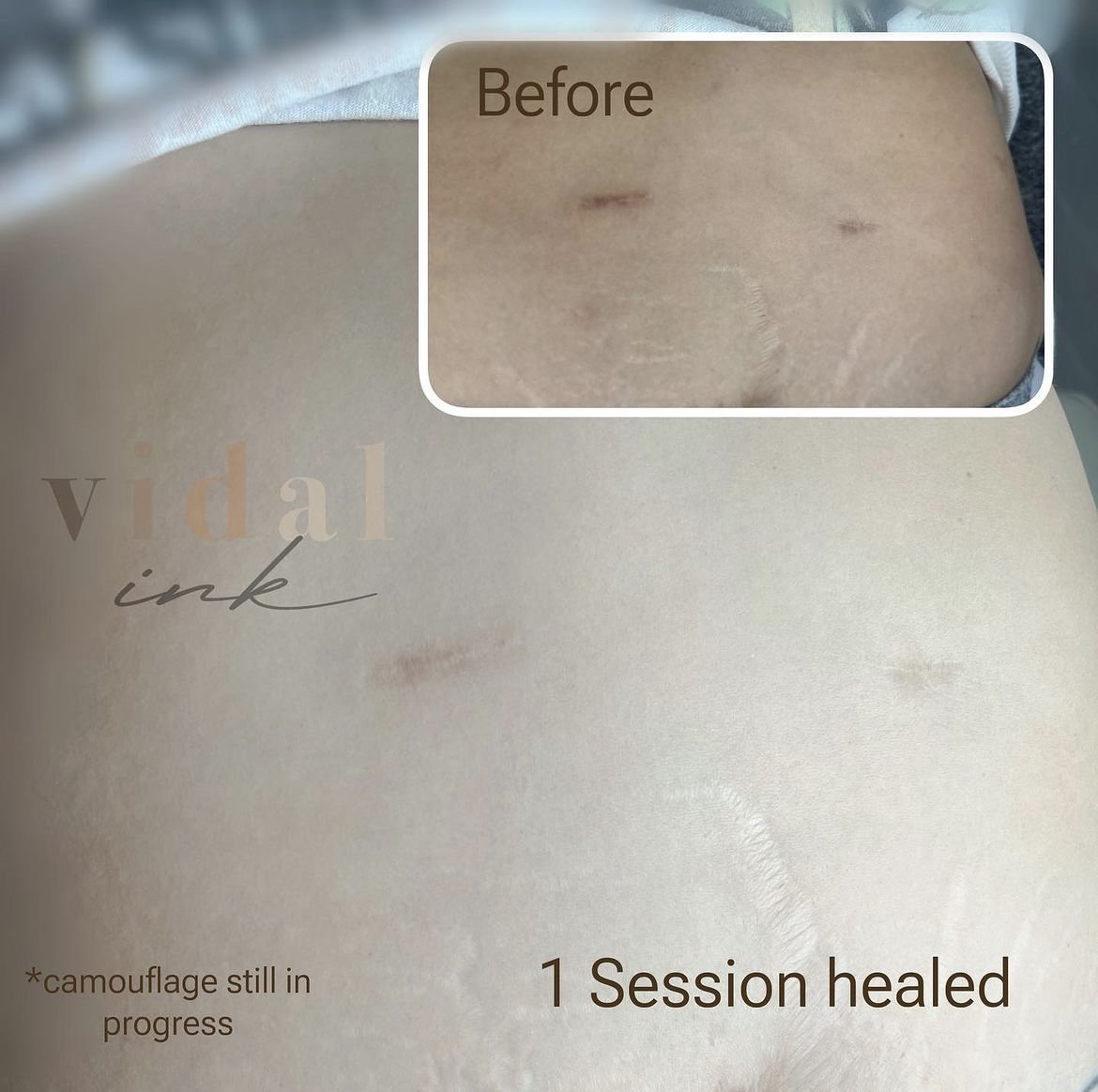
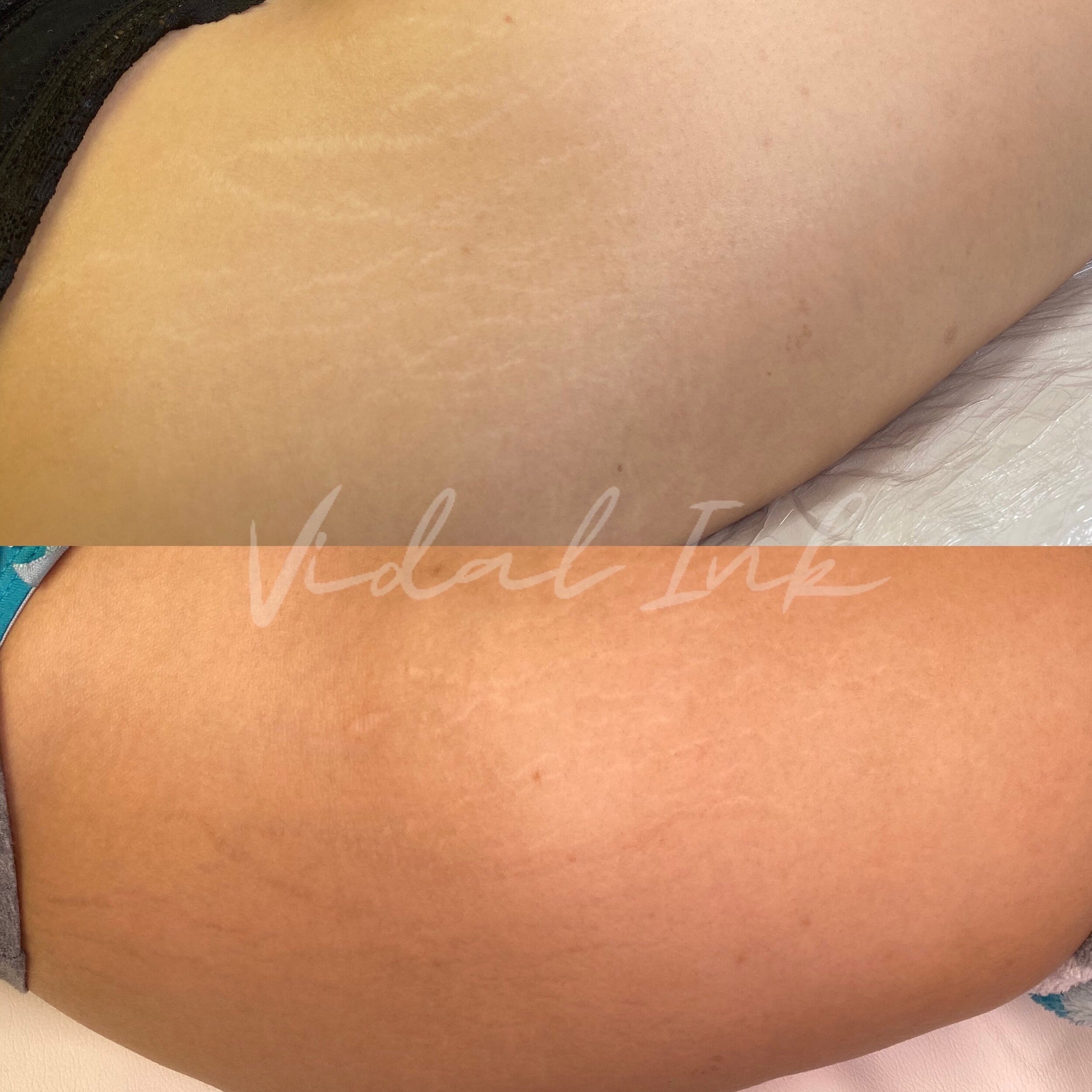
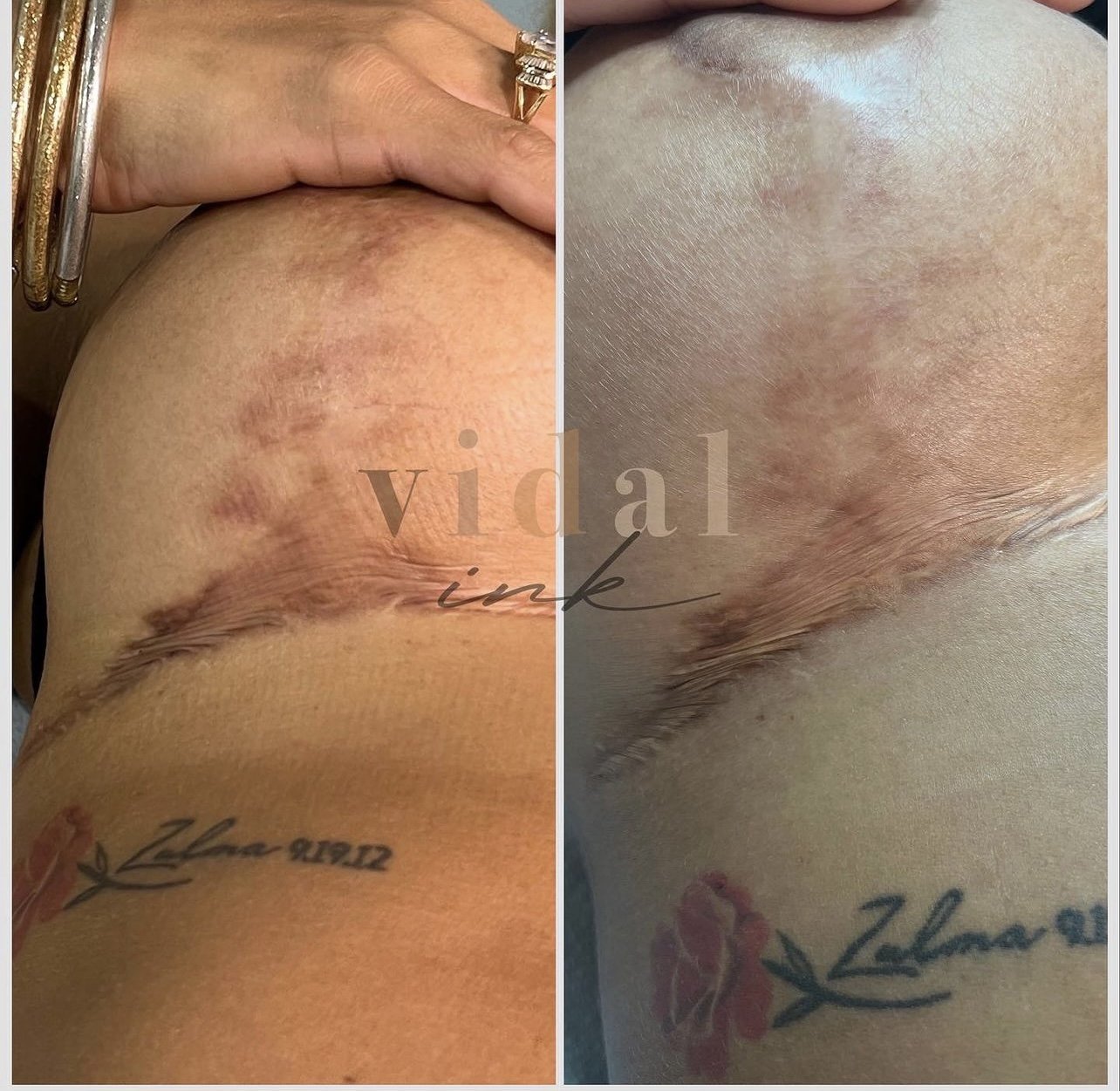
Skin Camouflage—often referred to as Brazilian Skin Camouflage—is an advanced paramedical tattooing technique designed to subtly refine the appearance of scars, stretch marks, and areas of uneven pigmentation. This sophisticated treatment minimizes visual contrast between the skin and affected areas, allowing them to blend harmoniously with your natural complexion and restoring a sense of confidence in your skin.
Each treatment is entirely designed to each clients specific needs. A precise, custom-blended pigment is formulated to mirror your unique skin tone. Using meticulous, controlled techniques, the pigment is delicately tattooed into the skin to soften the appearance of scars and stretch marks while maintaining a natural, seamless finish.
It is important to note that skin camouflage is not a removal procedure. Rather than eliminating scars or stretch marks, it addresses discoloration—rebalancing areas that appear lighter or darker than the surrounding skin to create a more uniform and refined appearance.
Skin camouflage is suitable for fully healed surgical scars, injury-related scarring, stretch marks, and areas of hyperpigmentation or hypopigmentation that are a minimum of two years post-healing. Each client is carefully assessed to ensure optimal results and the highest standard of care.







FAQs
-
All skin camouflage sessions are scheduled directly by the artist following your initial consultation. A complimentary 15-minute video consultation is required prior to booking and serves as an essential first step in your treatment journey.
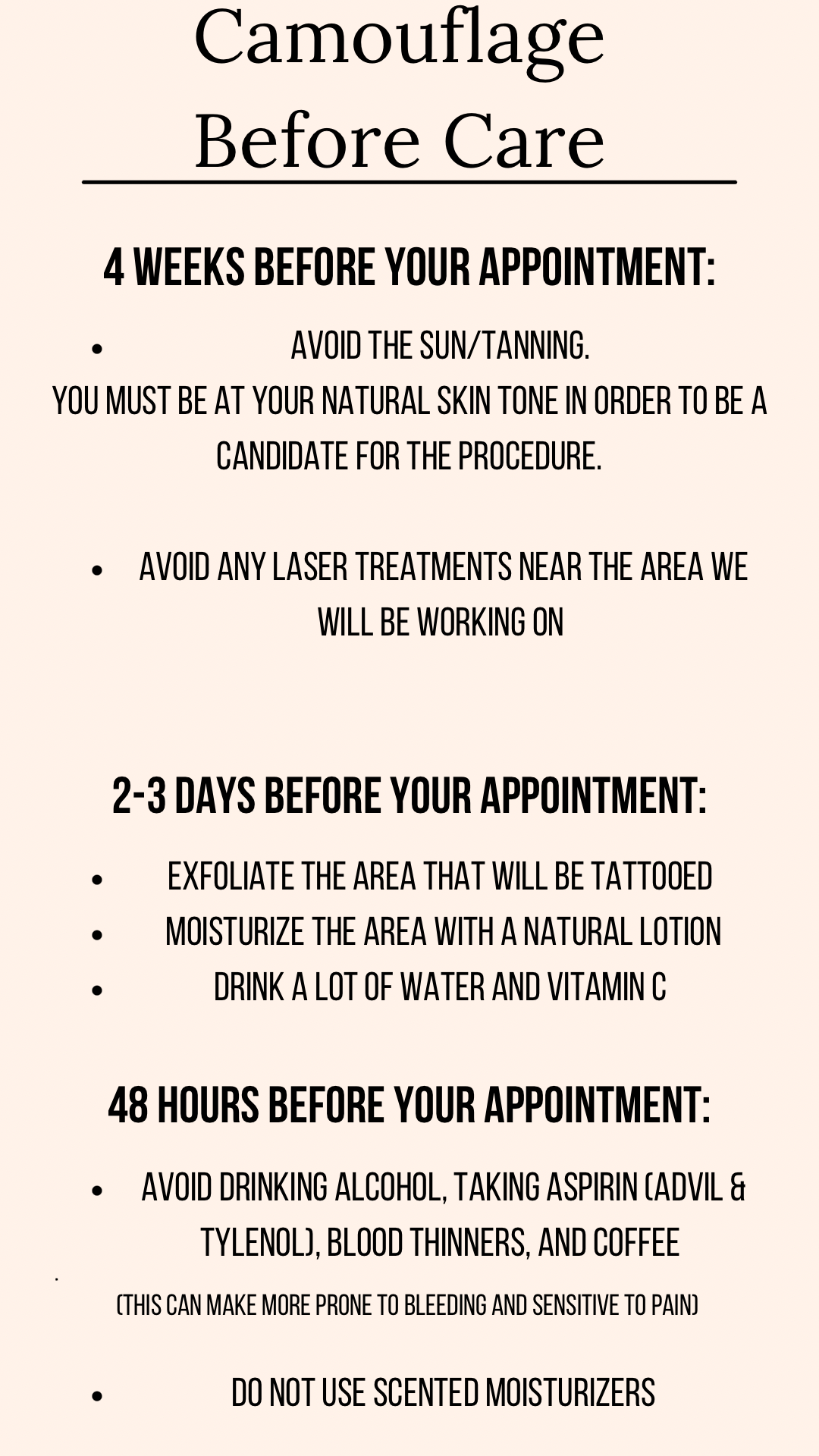
During this private consultation, the artist will assess your candidacy, provide a clear and realistic overview of expected outcomes, address any questions or concerns, and review both pre-procedure guidelines and post-treatment care. This personalized approach ensures the highest standard of care and results tailored specifically to you.
-
Topical numbing agents are not used during skin camouflage treatments. Sensation is comparable to that of a traditional tattoo; however, sensitivity can vary significantly depending on the type and location of the scar tissue. Some areas—such as tummy tuck scars—may have minimal to no sensation, while others, including burn scars, can be more sensitive.
Each treatment is approached with care and attentiveness, with the artist continuously monitoring comfort levels throughout the session to ensure a controlled and respectful experience.
-
Scars and stretch marks heal uniquely, influenced by individual skin type and the body’s natural regenerative process. During your consultation, we will discuss what to expect, so you feel informed and confident throughout the process.
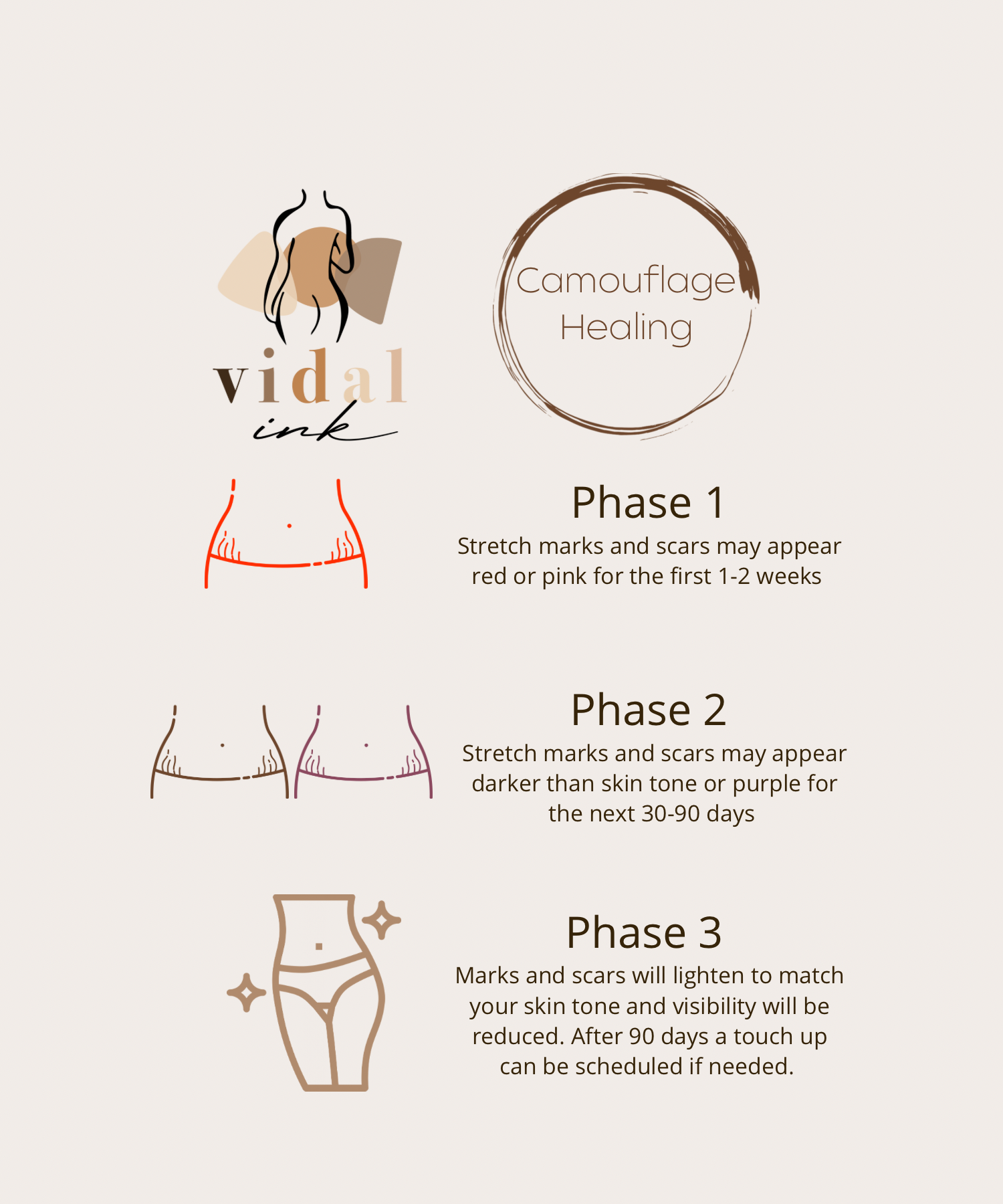
Following treatment, the area may appear red for approximately 3 days and may look darker for several weeks thereafter. While the skin itself typically heals within two weeks, pigment tones continue to evolve and gradually stabilize over a period of 40-60 days.
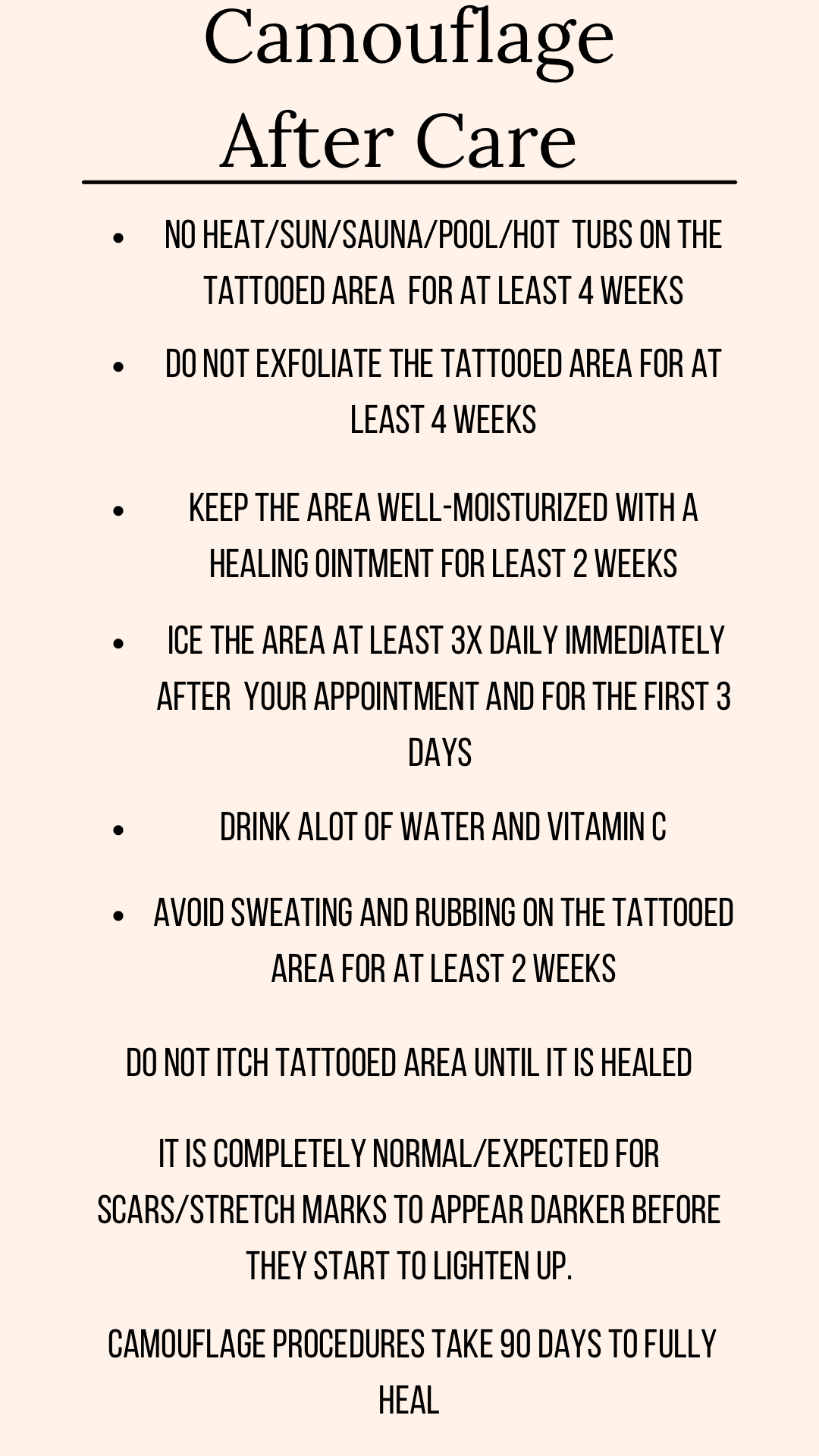
During the healing phase, diligent aftercare is essential. The treated area must be kept away from heat exposure and consistently moisturized with the recommended ointment to support proper healing and ensure the most refined, long-term results.
-
The exact number of sessions required varies depending on individual needs and the specific area being treated. A minimum of two sessions is typically necessary to achieve the most refined and lasting results.
-
The cost of skin camouflage is determined by the size and complexity of the area being treated. All pricing is carefully reviewed and confirmed during your consultation to ensure full transparency. Sessions typically range from $275 to $575.
-
Skin camouflage is not a removal procedure. Instead, carefully selected pigments are implanted into the skin to harmonize with your natural complexion, creating a subtle camouflage that minimizes the appearance of scars and marks. While this technique effectively corrects color, it does not alter the texture of the treated area.
-
Skin camouflage provides permanent results. In some cases, a subtle touch-up may be recommended after approximately five years to maintain optimal appearance. Longevity can vary based on lifestyle factors, such as daily sun exposure, which may gradually affect pigment intensity.
-
Skin camouflage is primarily designed for color correction and is not intended to alter the texture of scars or stretch marks. That said, some improvement in texture may occur naturally. This can result from the body’s collagen response to the micro-trauma caused by the pigment implantation process, subtly enhancing the skin’s overall appearance.
-
Your skin camouflage tattoo is designed to maintain its color in the sun, while the surrounding skin will tan naturally. Although this may create a slight contrast between tanned skin and the camouflage, your scars or marks will remain significantly less noticeable than before treatment.


How does Skin Camouflage work?
Skin camouflage works by implanting tattoo ink over scars and stretch marks to change its color. By doing so, your scar or stretch mark will match the color of your skin, thus creating a camouflage effect by reducing its visibility. This tattoo technique can be used to cover light and dark scars. At Vidal Ink, we use a delicate technique to produce natural-looking results. Once your scar or stretch mark is camouflaged by us, you will not be able to see tattoo ink in your scar, it will look just like your skin. This delicate technique will require more than one session to camouflage your scar or stretch mark. We cannot guarantee how many sessions it will take to achieve your desired results due to every ones individual skin healing process. Although skin camouflage is not intended to change the texture of scars, some clients do see improvement in the texture of their scars due to the tattoo healing process. Once the ink is implanted into your skin, it is permanent. Skin camouflage will last forever with the exception of fading in areas that are exposed to a lot of direct sunlight or UV radiation and in high friction areas such as your hands and feet.

Book your consultation today

What to expect after your session
Skin camouflage is not a procedure that produces immediate results. Although you may be able to see some changes in your scars or stretch marks immediately, there will be swelling and redness on your scar or stretch marks for the first 3-7 days. While the swelling may subside within the first 3 days after your session, it is completely normal for redness to last up to 2 weeks after your session. The next phase of skin camouflage healing is what we call the darkening phase. During the next couple of weeks your scar or stretch mark may appear darker than it was initially, or slightly purple for the next 30 - 60 days after your session. Not every scar goes through this darkening phase, but if and how long it lasts depends entirely on the color of your scar or stretch mark, and your skins reaction to the pigment. After this phase your scar will heal fully, the pigment will stabilize in your skin, and you will enter the camouflage phase. Depending on your skins natural healing process, it may take scars and stretch marks a full 90 days to fully heal. Once you are fully healed (40-90 days) another session can be scheduled if needed.
We know this healing process is not ideal and it can be tough for some clients, so we are here for you throughout the entire healing process. You will have your before pictures to compare your scar to and we are always here to answer questions you have during healing. Client support is always our number one priority.
Before & After Care
